
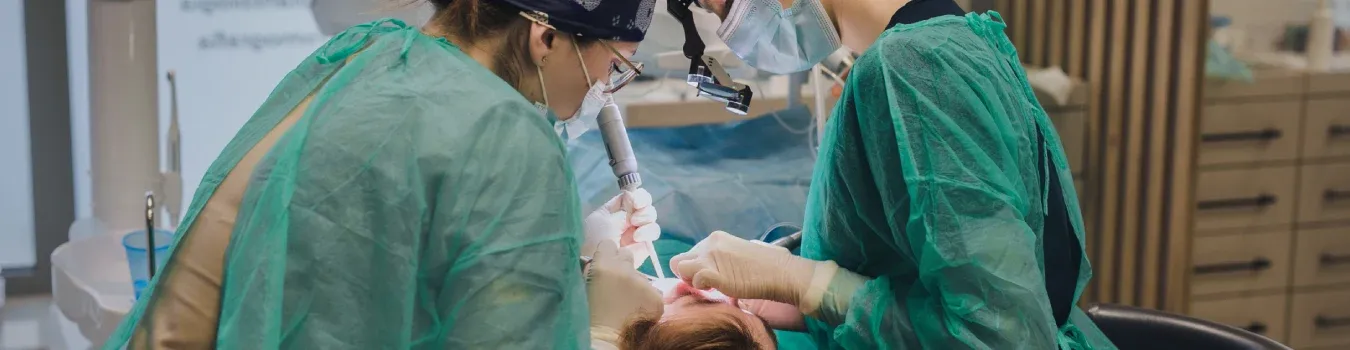
Restore teeth, chewing and your smile
Prosthodontics restores damaged teeth and replaces missing ones with crowns, bridges, veneers or dentures. The right solution depends on your remaining teeth, gums, bite and expectations. At ProDent in Nysa, we explain the options and plan any necessary dental or gum treatment before making the restoration.
You may benefit from an assessment if a tooth is badly damaged, teeth are missing or an existing denture has become loose or uncomfortable.
Restorative options
| Restoration | Typical purpose |
|---|---|
| All-ceramic crown | Covering and protecting a suitable damaged tooth |
| Temporary PMMA crown | Protecting a prepared tooth during an intermediate stage |
| Porcelain veneer | Altering the front surface of a suitable existing tooth |
| Inlay or onlay | Replacing part of a tooth when a conventional filling is not the best option |
| Acrylic denture | A removable replacement for missing teeth |
| Flexible Acron denture | A removable option considered for selected cases |
| Metal-framework partial denture | A removable restoration supported by remaining teeth and a metal framework |
| PEEK-framework denture | A removable restoration with a polymer framework where appropriate |
Crowns, bridges and veneers
A crown covers a prepared tooth. A tooth-supported bridge replaces a gap using neighbouring teeth as supports, which may require preparation of those teeth. A veneer covers part of an existing tooth’s front surface; it does not replace a missing tooth. Preparation for a veneer can be irreversible.
The dentist will discuss how much tooth structure needs to be removed, the condition of the supporting teeth and whether an alternative could preserve more tissue. A smile-design mock-up can help you review a proposed shape before the final work is made, where appropriate.
Removable dentures
Dentures can replace several or all missing teeth. Materials and designs differ in their support, maintenance and suitability. The assessment includes the remaining teeth, gums and available space. New dentures may need an adjustment period and review appointments to improve comfort.
Restorations supported by implants
An implant can support a crown or a larger restoration without relying on neighbouring teeth in the same way as a tooth-supported bridge. Implant treatment requires separate surgical assessment and a healing plan. For full-arch replacement, see All-on-X.
Our on-site dental laboratory
ProDent Lab works with the clinical team in Nysa. Depending on the case, we use digital scans or conventional impressions, with CAD/CAM technology supporting the design and manufacture of restorations.
Having a laboratory on site helps communication about fit, shape and shade. It does not mean every restoration can be completed in one appointment: preparation, trials, laboratory stages and healing can all affect the schedule.
What does treatment involve?
- Examination and planning: assess the teeth, gums and bite; discuss options and costs.
- Preparation: treat active disease and prepare teeth or supporting structures where required.
- Records: take scans or impressions and select the proposed shade and shape.
- Temporary restoration and trials: use these where the treatment plan requires them.
- Fitting: check the final restoration, bite and comfort.
- Maintenance: explain cleaning and arrange reviews.
Splints and bite-related care
We also provide selected appliances for bruxism, deprogramming and splint therapy after assessment. These are designed for a different purpose from whitening trays or orthodontic retainers. Your dentist will explain the reason for the appliance, how to wear it and when to return for review.
Common questions
How long will treatment take?
The timetable depends on the number of teeth, type of restoration, laboratory stages and any treatment or healing needed first. We explain the expected appointments when planning care.
Do gum disease and decay need treating first?
Usually active problems need to be controlled so the restoration has a suitable foundation. The sequence is planned individually.
Can crowns and veneers still develop problems?
Yes. The teeth and gums around them still need cleaning and checks. Decay, gum disease, fracture and changes in the bite can affect a restoration over time.
What if my denture hurts or becomes loose?
Contact the clinic for a review. Do not attempt to reshape or repair it yourself. Sore areas or a changed fit may need an adjustment or reassessment.
Should I remove my denture at night?
This is generally recommended unless your clinician gives different instructions for your circumstances. Clean it as advised and keep your gums and remaining teeth clean too.
See the prosthodontic price list and book a consultation. Further reading: NHS information on dentures.